
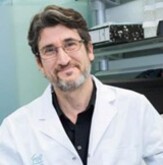
Orland Díez obtained his PhD in Biology at the University of Barcelona (1982), the Specialization in Clinical Biochemistry by the Spanish Ministry of Health (1992), and the Accreditation in Human Genetics by the Spanish Association of Human Genetics (2002).
He was a staff member in different laboratories in hospitals and research institutes, like the Genetic Service of Hospital de Sant Pau, and the Area of Clinical and Molecular Genetics of the University Hospital Vall d’Hebron, and he was Senior researcher of the Hereditary Cancer Genetics Group at the Vall d’Hebron Institute of Oncology (Barcelona, 2001-2024).
At the present time he is the Chairman of the Committee on Clinical Molecular Biology Curriculum (C-CMBC) of the International Federation of Clinical Chemistry and Laboratory Medicine (IFCC).
In his 30 years of professional and scientific activity in the field of hereditary cancer, he has authored more than 200 national and international publications and book chapters, and more than 200 conference presentations, and has supervised several doctoral theses. He has been a member of various international consortia and a professor in numerous courses and master's programs at various research centres and universities.
Title of the speech:
Genetic testing for Hereditary Cancer in Resource-Limited Settings: the role of POCT, digital integration, and clinical Impact
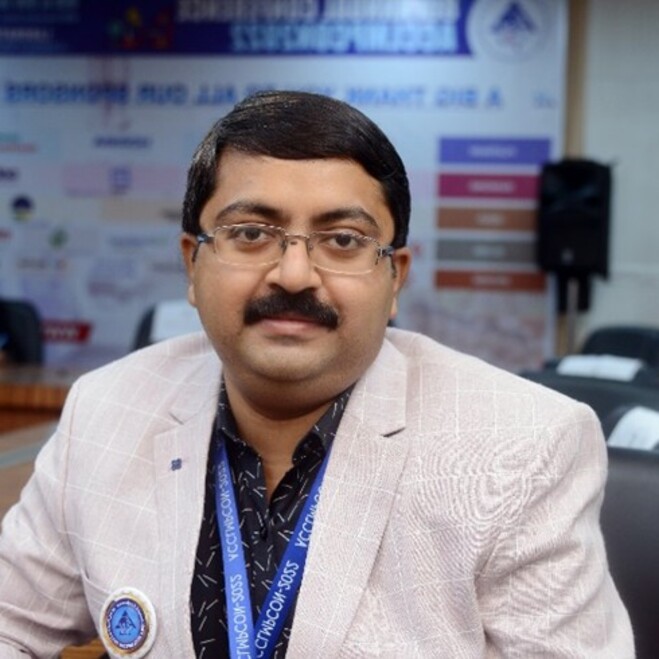
Dr. Anirban Ganguly (MBBS, MD, DNB, MNAMS) is an Associate Professor of Biochemistry at AIIMS Deoghar, India, with over 10 years of post-MD teaching and research experience. He is actively engaged in medical education and translational biomedical research, with a strong focus on molecular mechanisms of disease, cancer biology, neurodegeneration, and metabolic disorders.
Dr. Ganguly is a member of several national and international scientific organizations, including the International Federation of Clinical Chemistry and Laboratory Medicine (IFCC), and contributes to global scientific discourse as a topic editor for leading Frontiers journals. He has also served as a principal investigator and co-investigator in multiple extramural research projects funded by ICMR.
He has authored numerous peer-reviewed publications and book chapters in high-impact international journals and edited volumes, and has an active research profile with over 1000 citations. His academic work bridges basic science and clinical applications, particularly in oncology, neurobiology, and metabolic disease pathways.
Title of the speech:
Applications of Artificial Intelligence in Clinical Biochemistry Lab
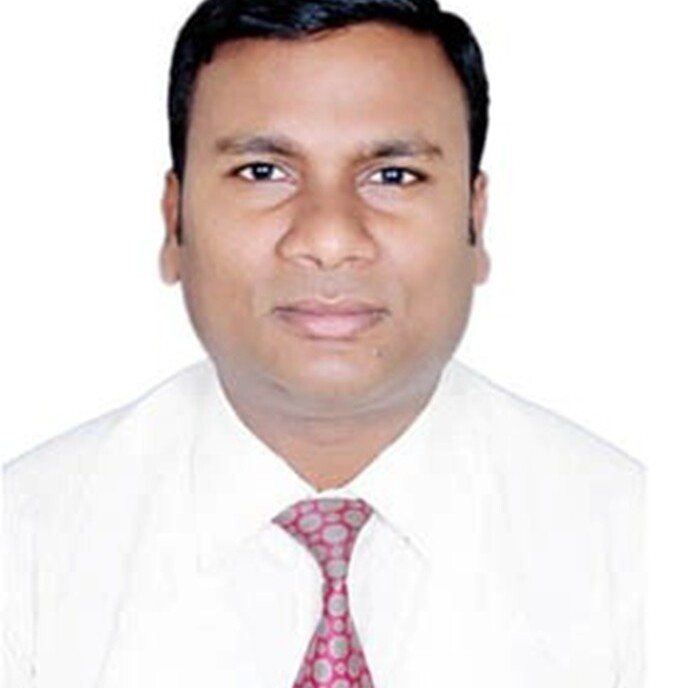
Dr. Jay Prakash Sah, PhD (South Korea), is a Post-Doctoral Research Fellow in the Division of Cardiovascular Disease, Heersink School of Medicine, University of Alabama at Birmingham (UAB), USA. He also holds a post-doctoral appointment in Molecular and Cellular Pathology at UAB, with research focused on cardiovascular biomechanics, ventricular assist devices, vascular biology, and molecular mechanisms underlying muscle regeneration and disease.
He earned his PhD in Integrated Biomedical Science (Molecular Biology) from Soonchunhyang University, South Korea, and a Master’s in Medical Laboratory Technology (Clinical Biochemistry) from India, where he graduated with university first rank. He completed his Bachelor’s degree in Microbiology from Tribhuvan University, Nepal.
Dr. Sah has over a decade of academic and teaching experience as an Assistant Professor in Medical Biochemistry in Nepal. He is actively involved in international scientific societies including the International Federation of Clinical Chemistry and Laboratory Medicine (IFCC), the American Society for Artificial Internal Organs (ASAIO), and the American Heart Association (AHA).
He has authored numerous peer-reviewed publications in international journals and has presented his research at major global conferences. His research interests span cardiovascular disease, laboratory medicine, molecular biology, and translational biomedical sciences, with a strong focus on clinically relevant laboratory outcomes and global health research.
Title of the speech:
Rapid Molecular Diagnosis: Enhancing Clinical Decision-Making and Patient Outcomes
Dr. Rajiv Ranjan Sinha is a distinguished clinical biochemist and Professor of Biochemistry at Nalanda Medical College, Patna, India, where he also serves as Deputy Medical Superintendent. With over three decades of teaching and academic experience, he has mentored numerous undergraduate and postgraduate students and contributed extensively as an external examiner to leading institutions across India.
His areas of expertise include metabolic syndrome, polycystic ovarian syndrome, metabolic bone disorders, and heavy metal toxicity. Dr. Sinha has authored multiple research publications and has been an invited speaker at several prestigious international platforms, including IFCC WorldLab and the Asian-Pacific Congress of Clinical Biochemistry.
He currently serves as General Secretary of the Association of Clinical Biochemists of India (ACBI) and has held key leadership roles within international organizations, including representation at the Asia Pacific Federation of Clinical Biochemistry and Laboratory Medicine (APFCB) and the International Federation of Clinical Chemistry and Laboratory Medicine (IFCC). He is also actively involved in organizing major global congresses, including IFCC WorldLab 2026.
Title of the speech:
Connecting Care: How Digital Infrastructure and POCT are redefining Laboratory Medicine in Resource-Limited Settings
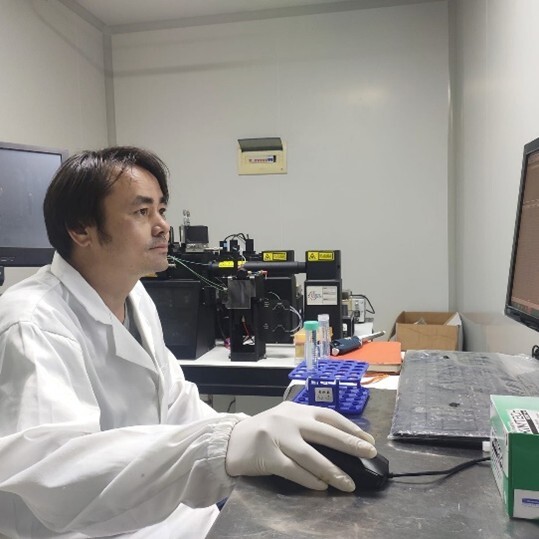
Kul Raj Rai is a microbiologist and molecular biology researcher currently serving as a Senior Scientific Officer at the Nepal Academy of Science and Technology (NAST). He earned his PhD in Microbiology from the University of Chinese Academy of Sciences under the prestigious CAS-TWAS President’s Fellowship, where his research focused on host-virus interactions and antiviral innate immunity.
Following his doctoral studies, Dr. Rai completed postdoctoral training at Fujian Agriculture and Forestry University, where he worked on long non-coding RNAs, microRNAs, and novel micropeptides, contributing to the discovery of the biologically active micropeptide miPEP-52 derived from lncRNA MALAT1.
His research interests include molecular cell biology, virology, immunology, viral pathogenesis, and inflammation-related diseases, with a focus on identifying novel diagnostic and therapeutic targets. Dr. Rai has also contributed actively to scientific leadership and professional societies in Nepal, including serving as President of the Microbiological Students Association of Nepal and General Secretary of the Nepalese Society for Microbiology.
Topic of Presentation: Non-Coding RNAs and ncRNA-Encoded Micropeptides: Emerging Potential Roles in Diagnostics and Therapeutics